Why is an icy road particularly dangerous for trucks?
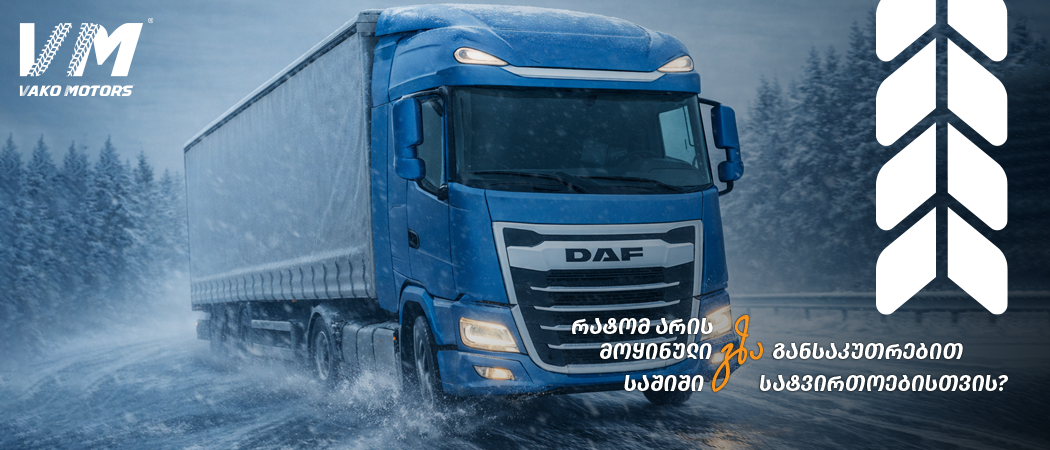
In winter, icy roads are one of the most serious challenges for truck owners. Ice significantly reduces tire grip on the road, increases braking distance, and decreases vehicle stability—especially on curves and downhill sections. Under such conditions, even the smallest mistake can result in loss of control.
Driving on icy roads involves several risks, including delayed brake response, lateral skidding, and unpredictable steering behavior. Reducing these risks directly depends on the type of tires installed on the truck and how correctly their size has been selected.
Truck tires are the only components that come into direct contact with the road. In cold winter conditions, properly selected tires significantly reduce the risk of skidding. Common tire sizes in the truck industry include 315/80 R22.5 and 295/80 R22.5 for drive axles, as they help improve fuel efficiency. For trailers, 385/65 R22.5 is most commonly used, as its wider surface area helps reduce the likelihood of slipping.
Along with tire size, tire condition and rubber quality are crucial. Worn tread, incorrect pressure, or using tires unsuitable for the season significantly increases the risk of accidents. Among the notable brands in the truck industry are AEOLUS and BLACKHAWK, known for producing premium-quality tires and offering customer-oriented solutions.
As a result, icy roads are not just an environmental factor for truck owners—they represent a major threat to transportation efficiency and road safety, which can be mitigated by choosing the right tires.