The rainy season is starting – what truck drivers need to know
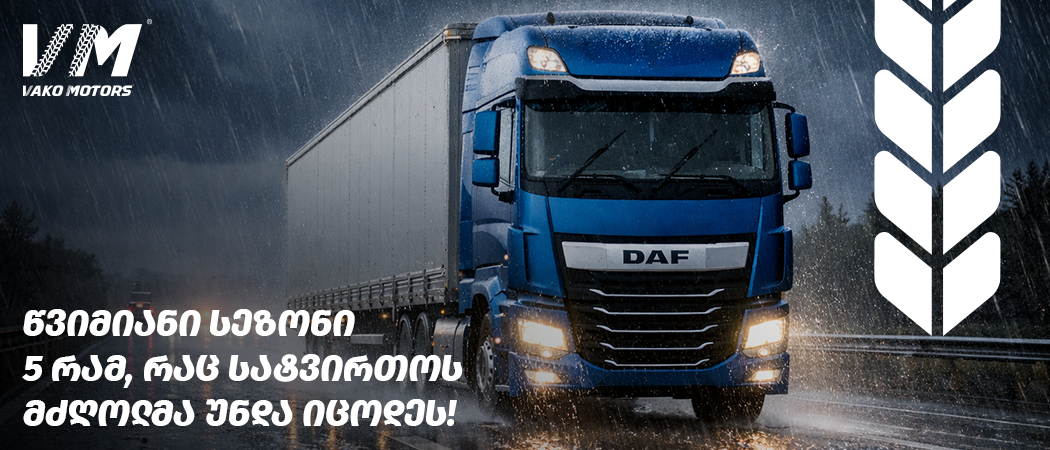
The start of the rainy season is a significant challenge for the trucking industry. Wet roads, reduced visibility, and technical risks increase the likelihood of accidents. When a heavy truck is traveling hundreds of kilometers, every decision directly impacts safety.
1. Technical condition
Before the rainy season begins, a detailed inspection of the truck is essential. The first thing a truck driver should consider is the condition of the tires, as traction significantly decreases on wet roads, and worn tires increase the risk of skidding.
Along with the tires, the proper functioning of the braking system is crucial — it must respond quickly and evenly, as braking distance increases in rainy weather. The truck’s exterior components also play a decisive role — properly functioning wipers, headlights, and all signal indicators ensure both safety and operational efficiency.
2. Adapting speed to weather conditions
In rainy weather, it is important for the driver to control speed. When transporting heavy cargo, losing control can be especially dangerous, therefore speed should always be lower than in dry conditions.
3. Increased following distance – more time to react
In addition to reducing speed, trucks must maintain at least double the usual following distance in rainy conditions.
A truck’s inertia and cargo weight increase stopping distance, so additional reaction time often plays a critical role in preventing accidents.
4. Driver’s physical and psychological readiness
Driving in the rain is more exhausting and requires greater concentration. Eyes tire more quickly, reaction time may decrease, and stress levels can rise.
Regular breaks, proper rest, and effective energy management are essential. Therefore, cabin comfort is important not only for the driver but also for the overall efficiency of the transportation process.
Even for experienced truck drivers, the rainy season is a test. A technically sound truck, adapted speed, increased distance, proper visibility, and good physical condition are the key factors that determine safe, stable, and efficient transportation.